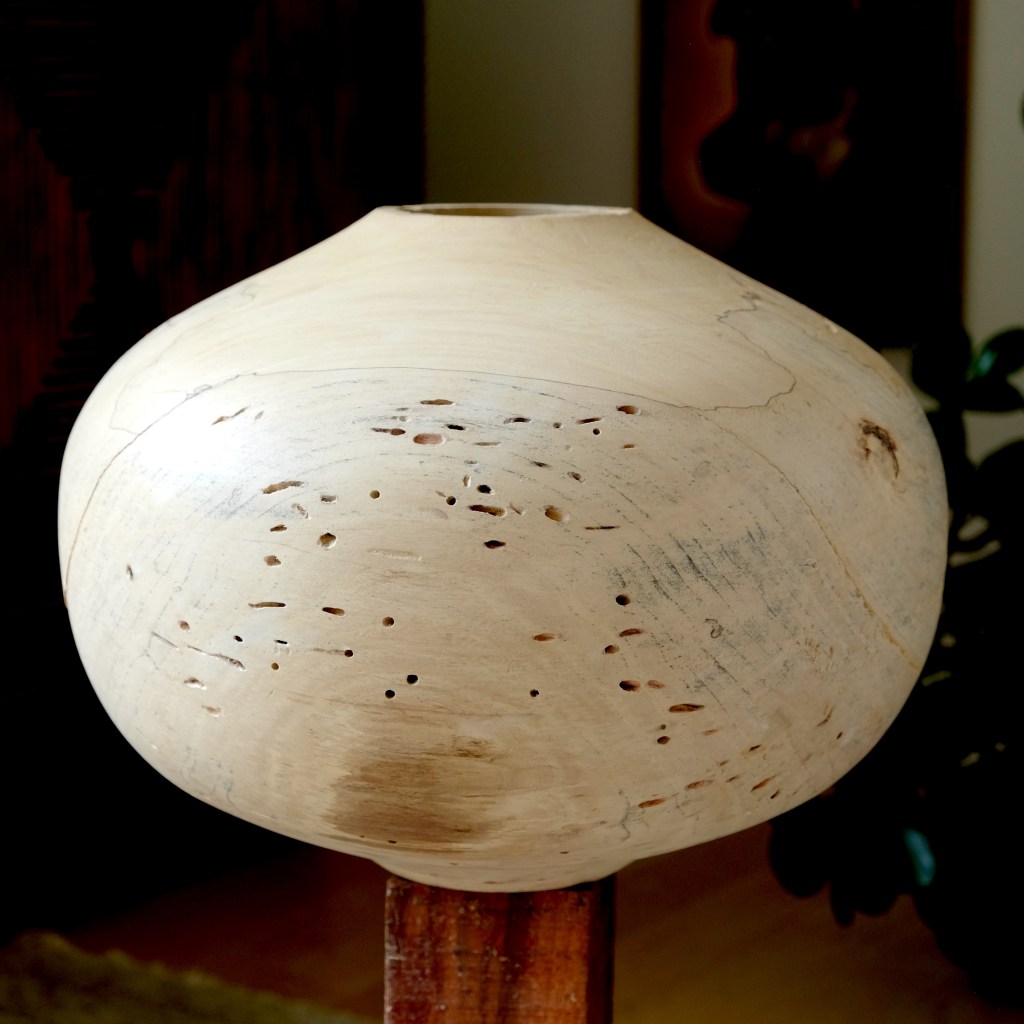
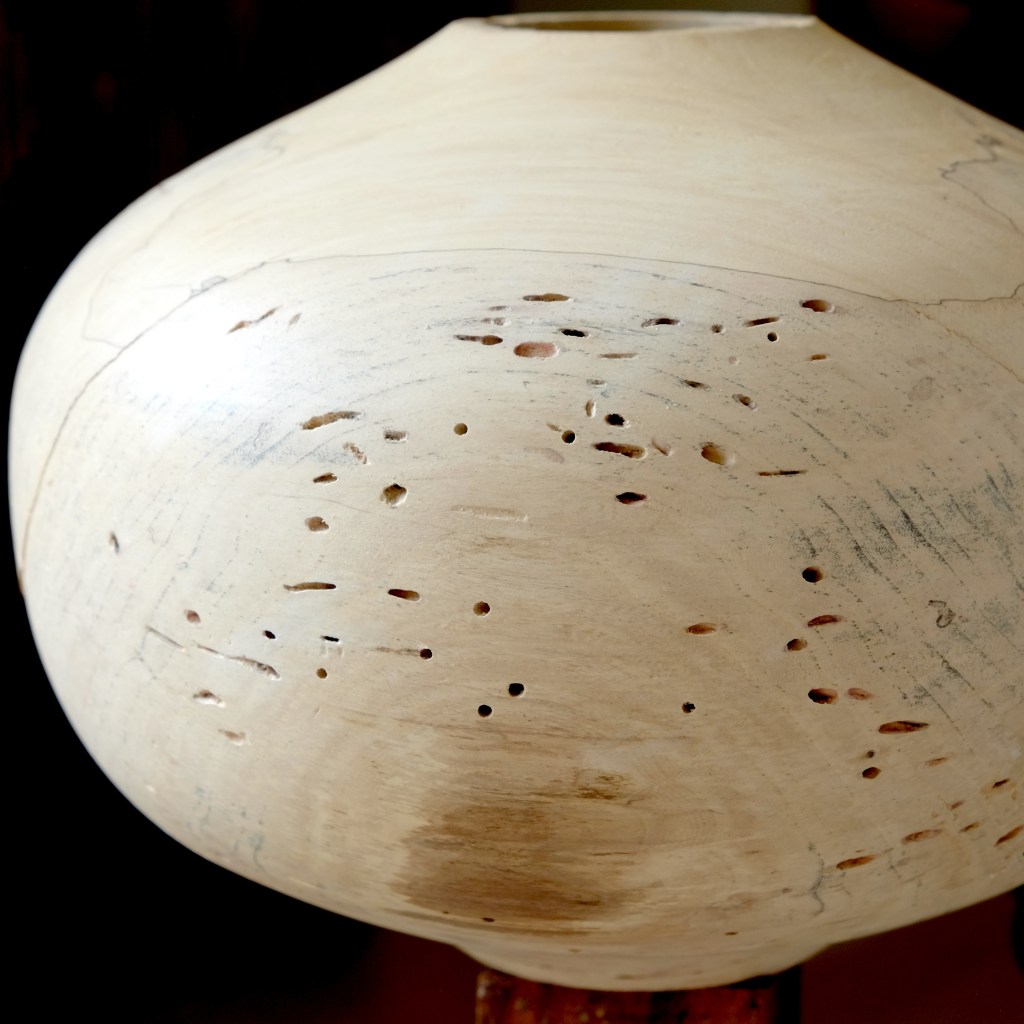
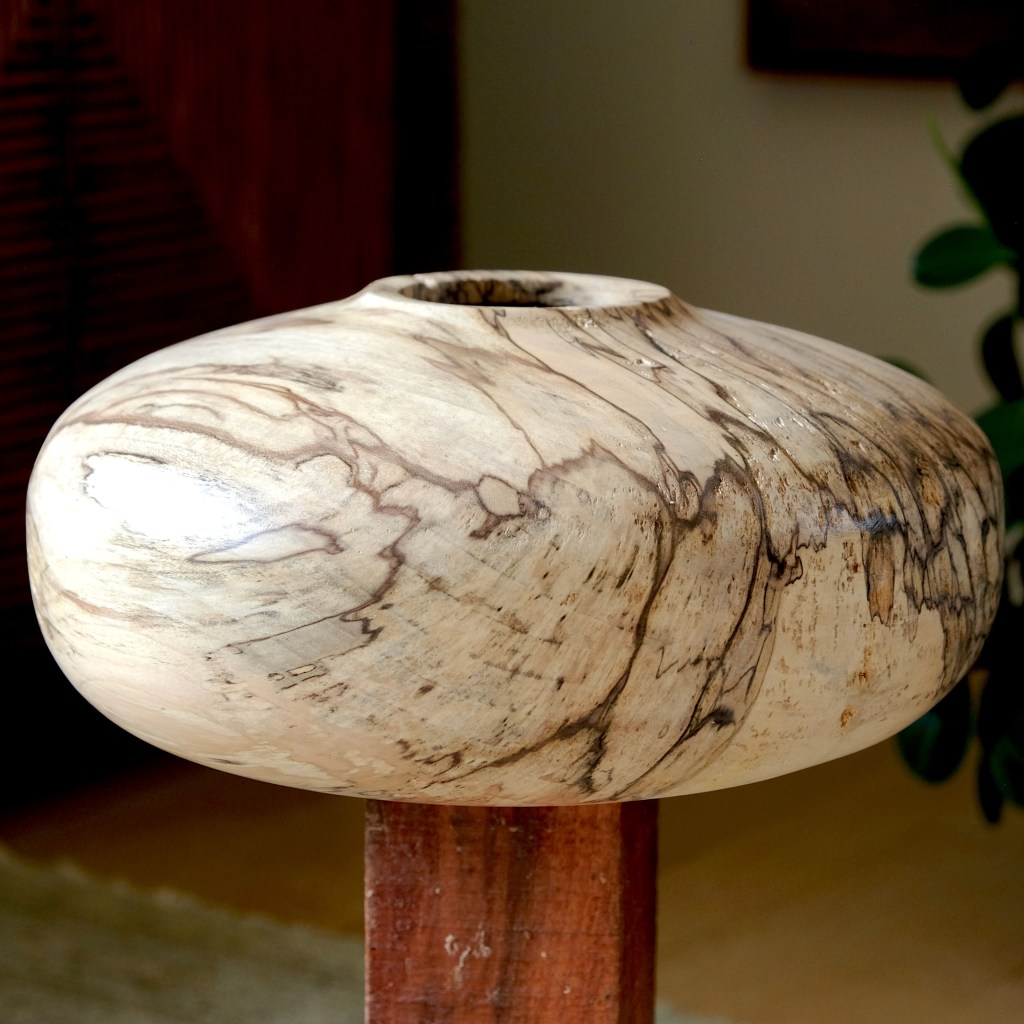
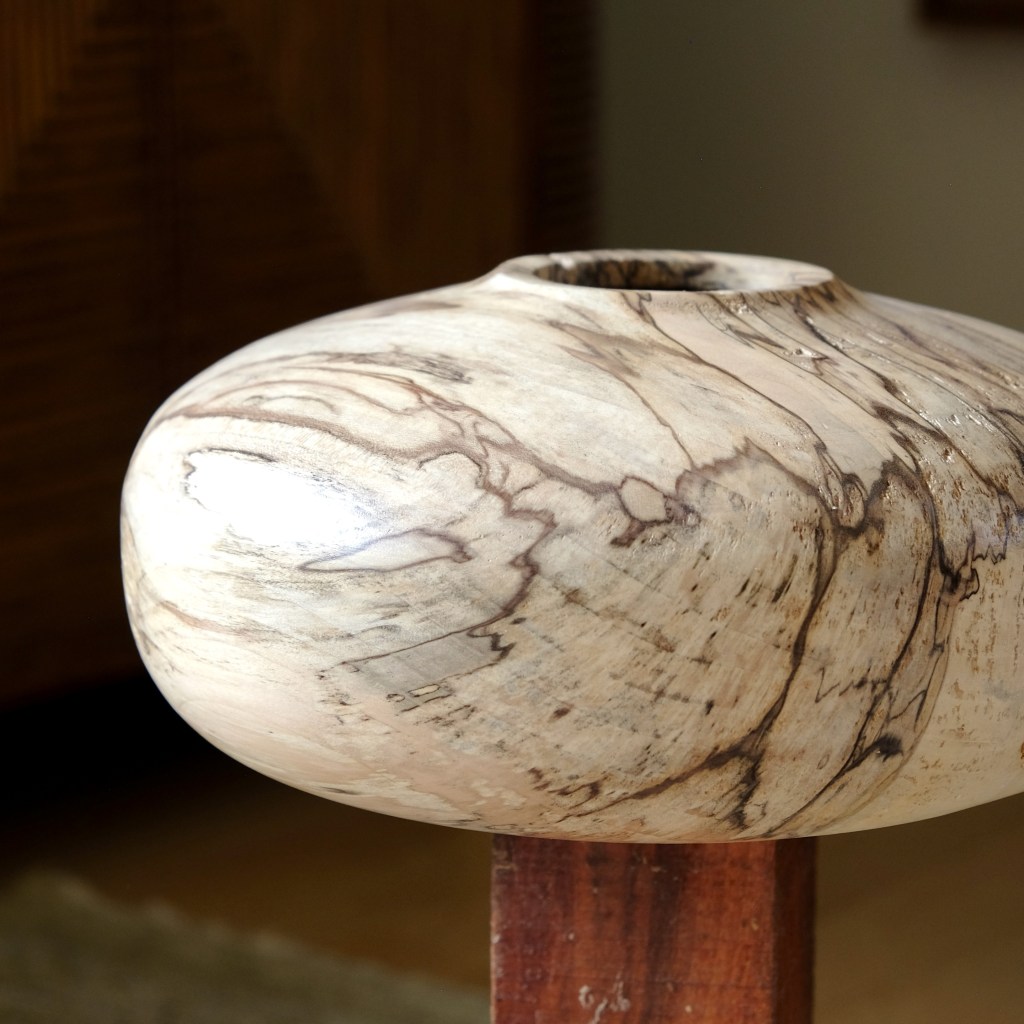
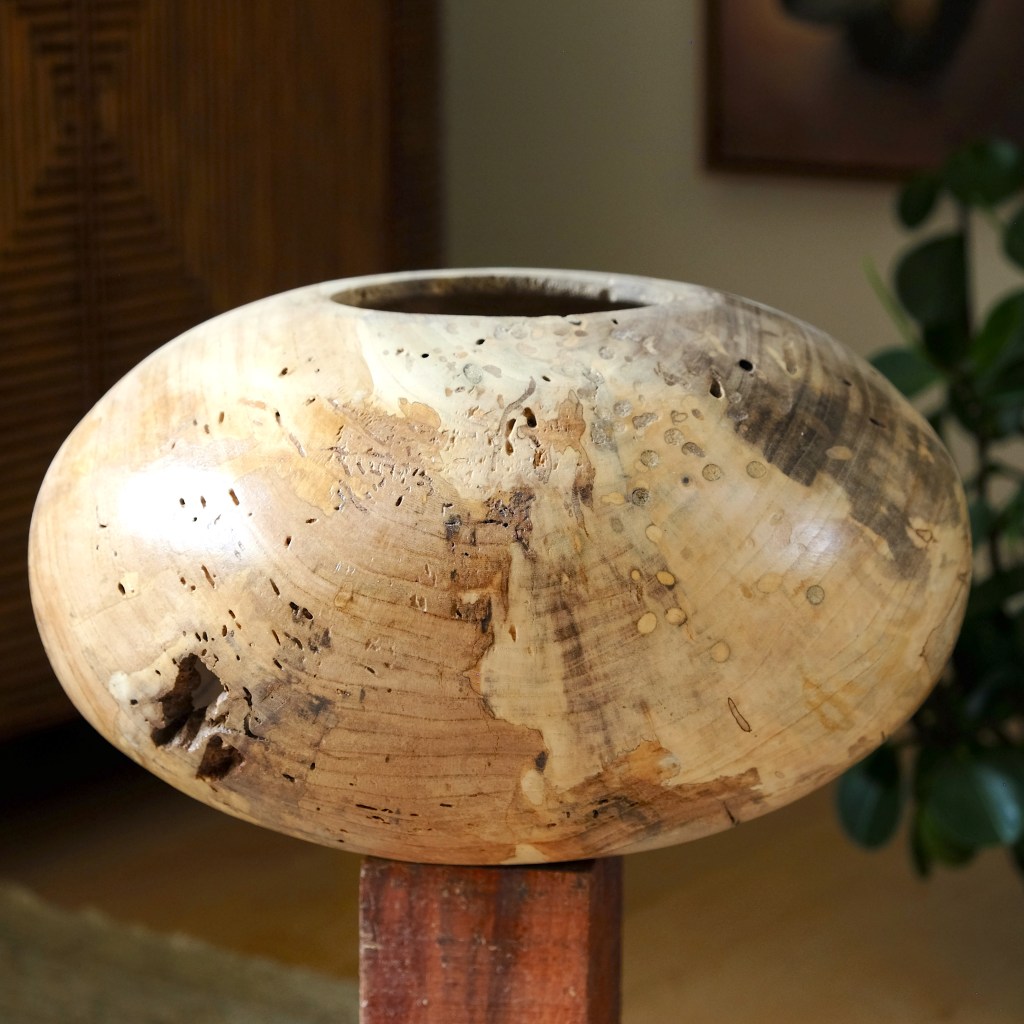
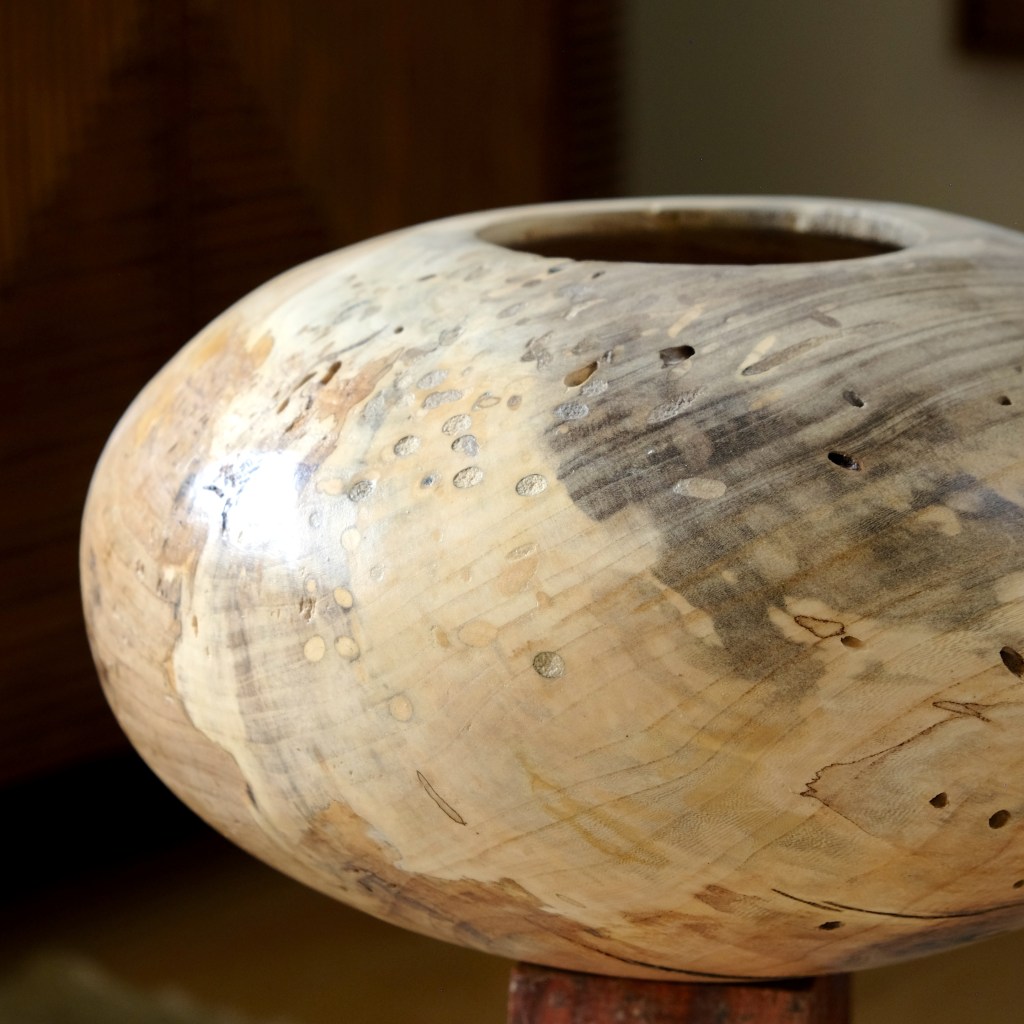
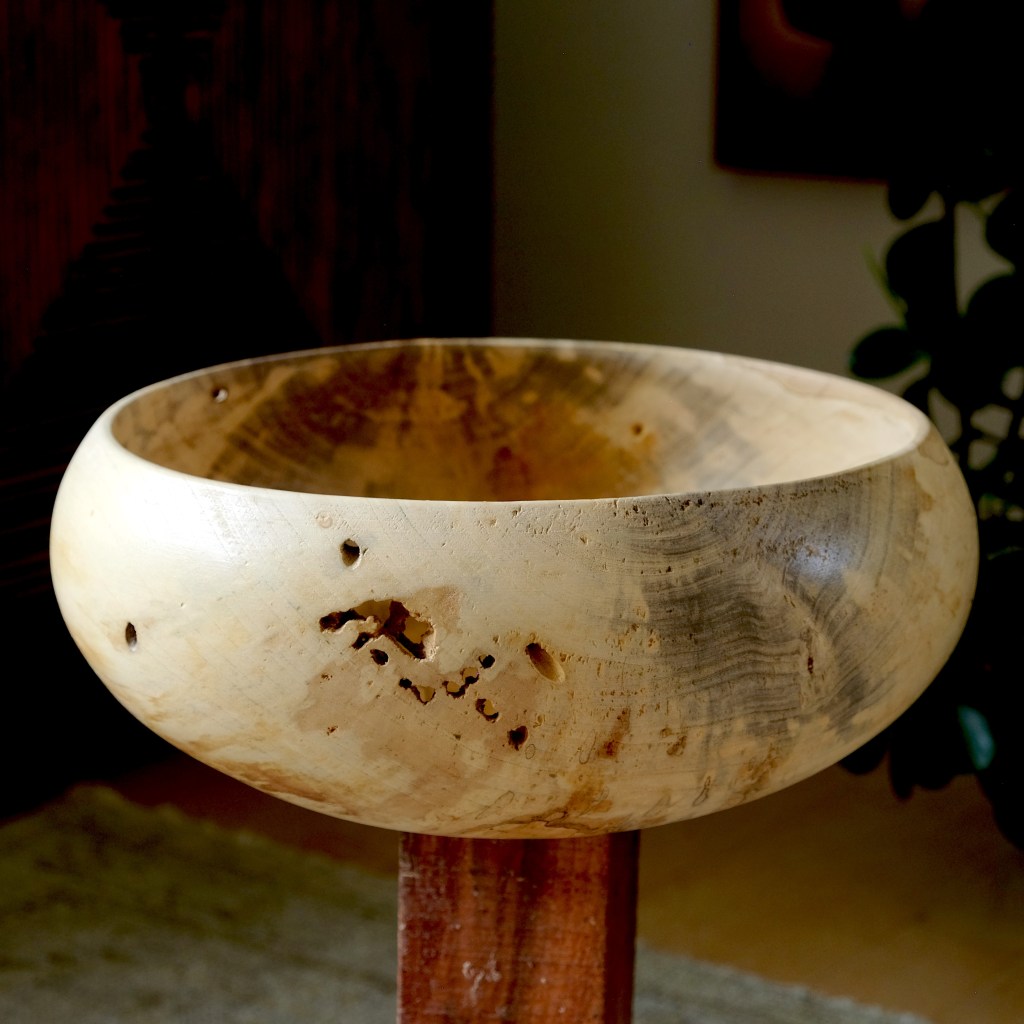
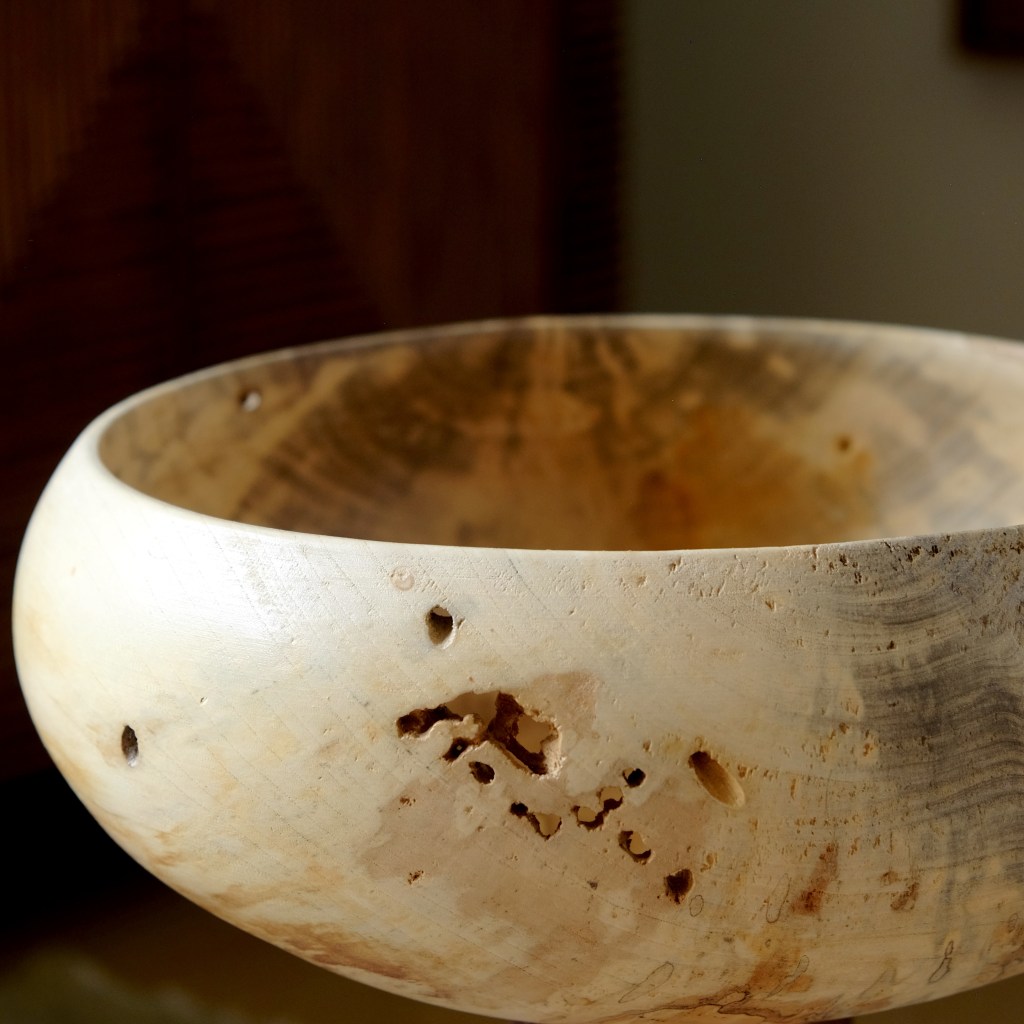
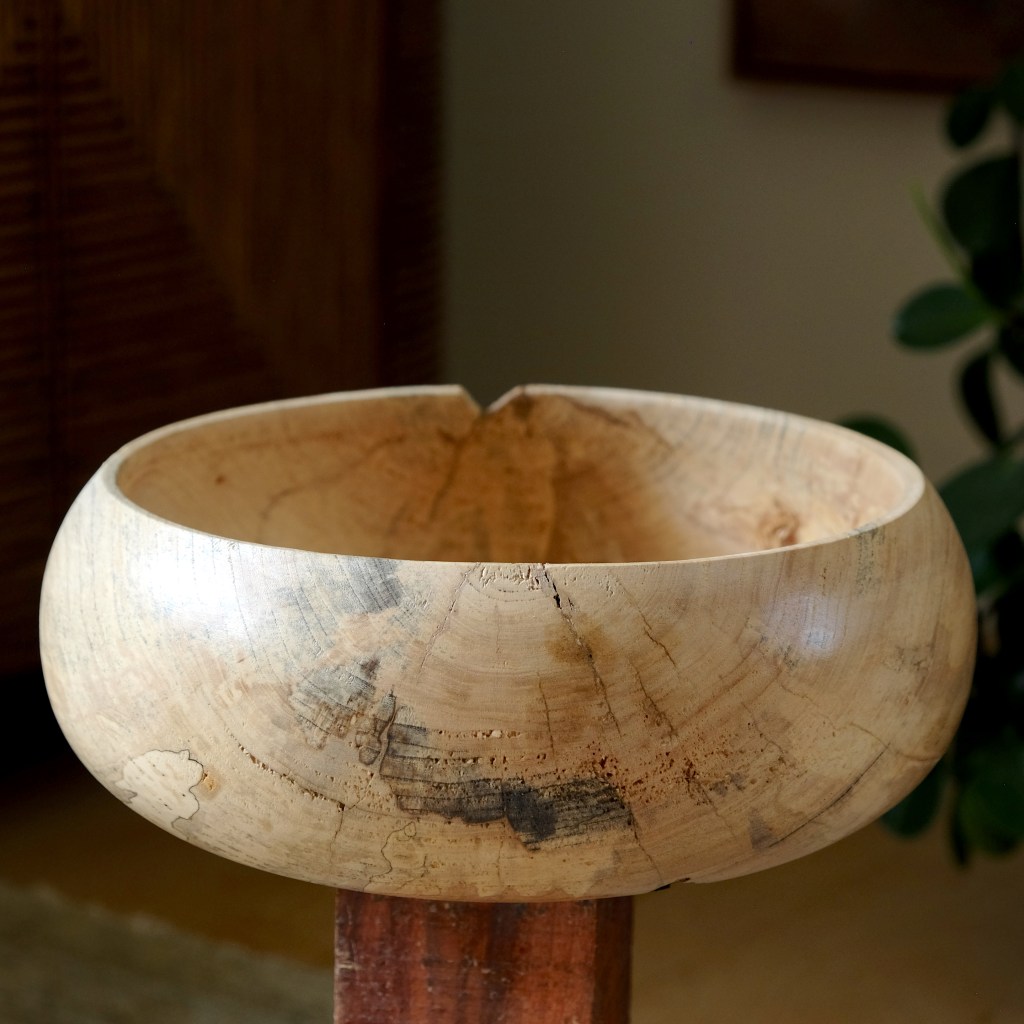
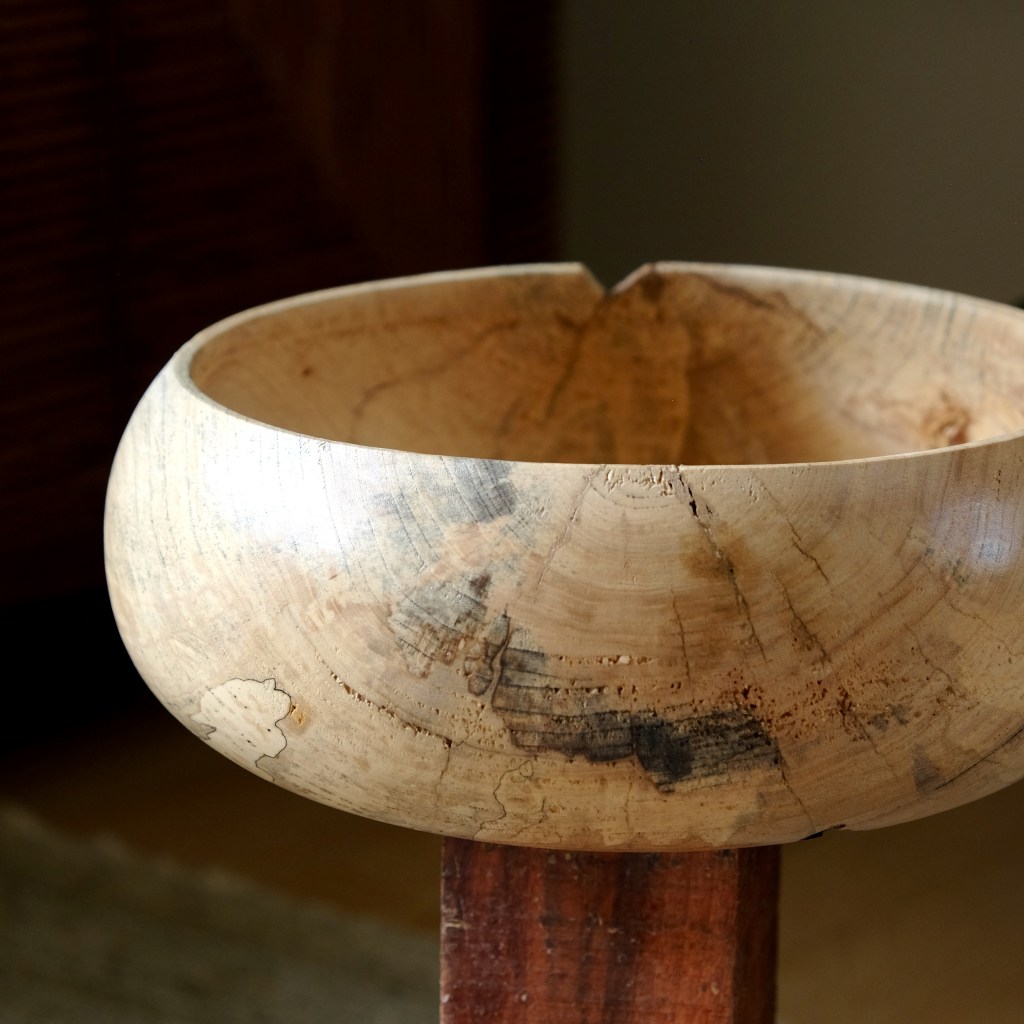
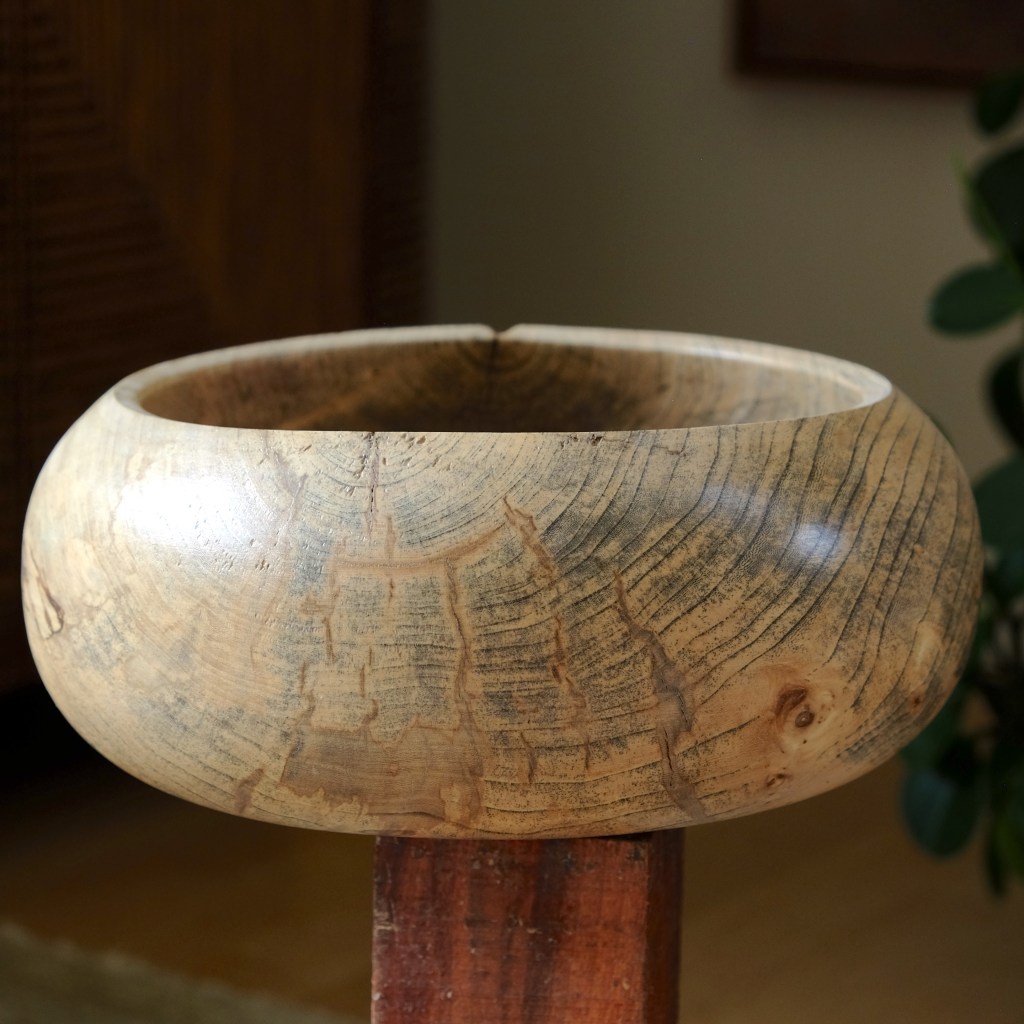
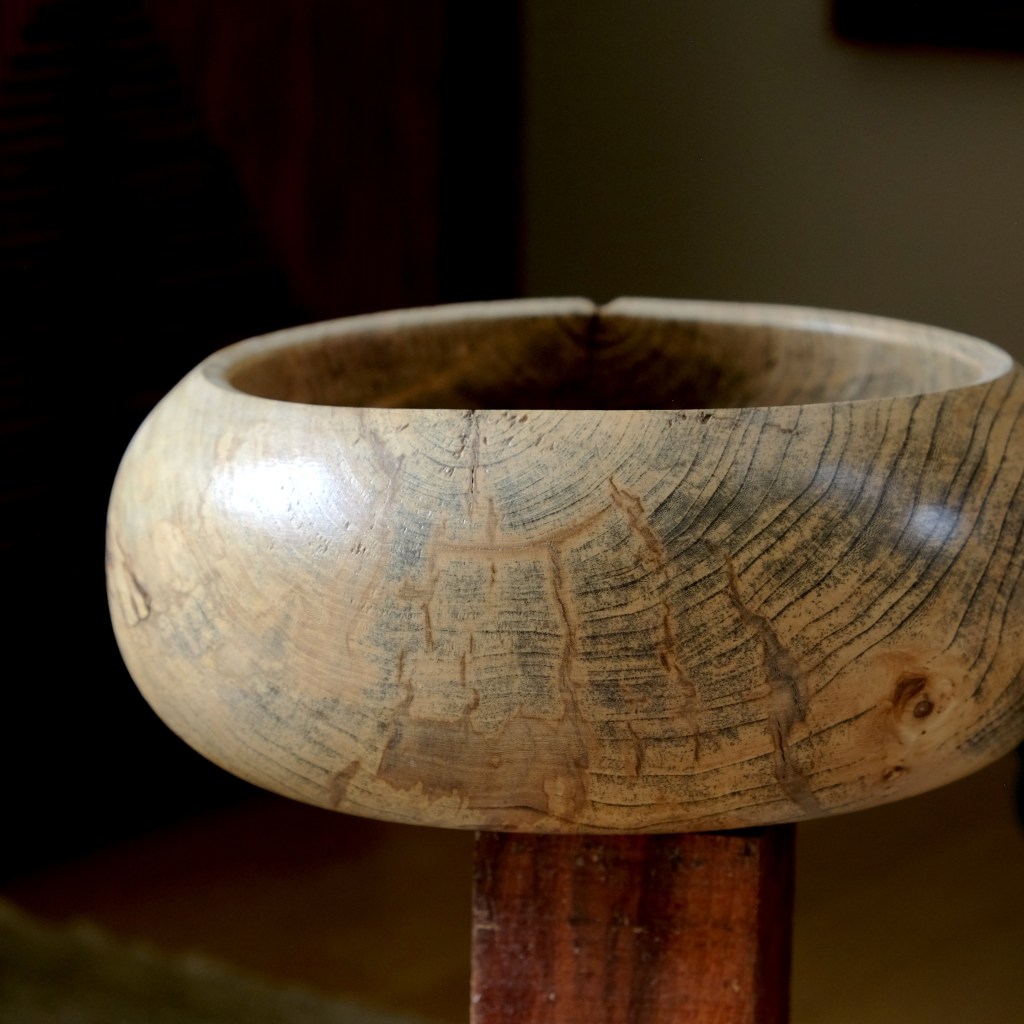
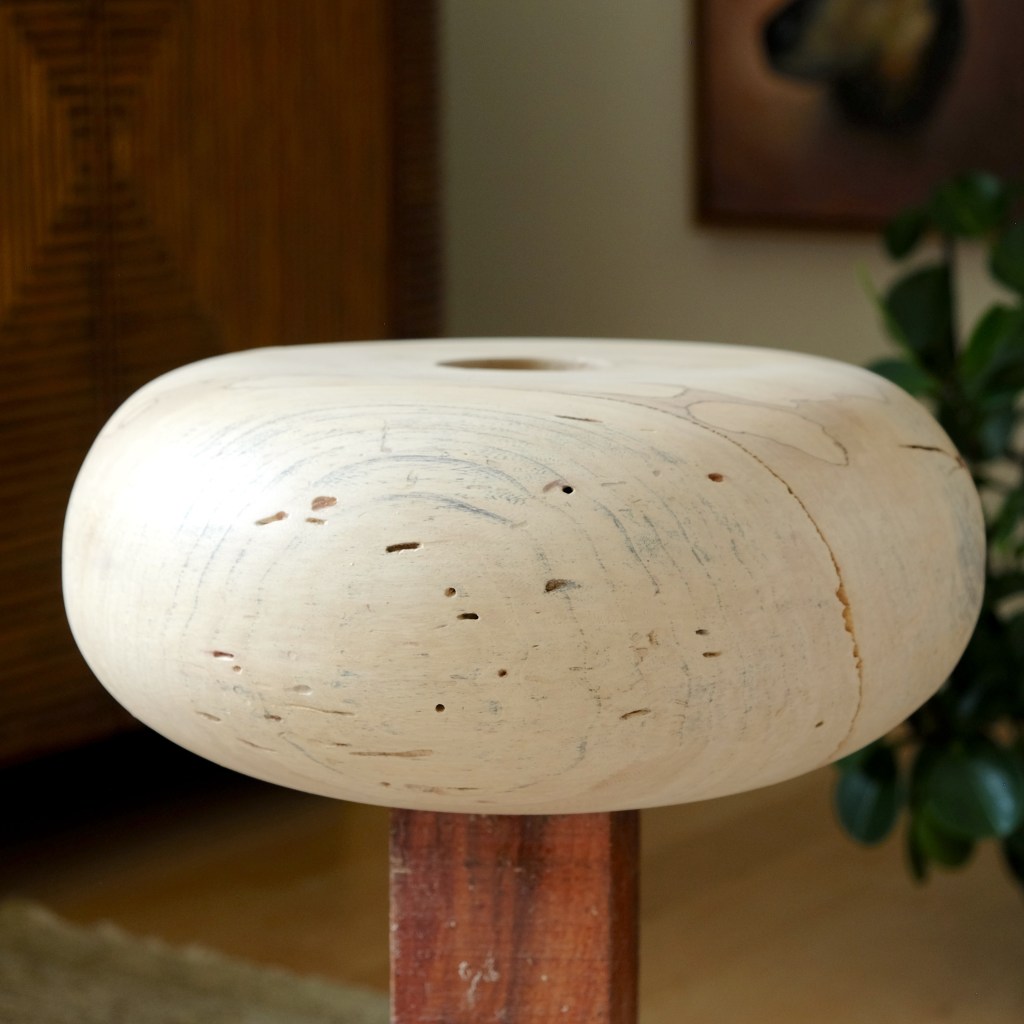
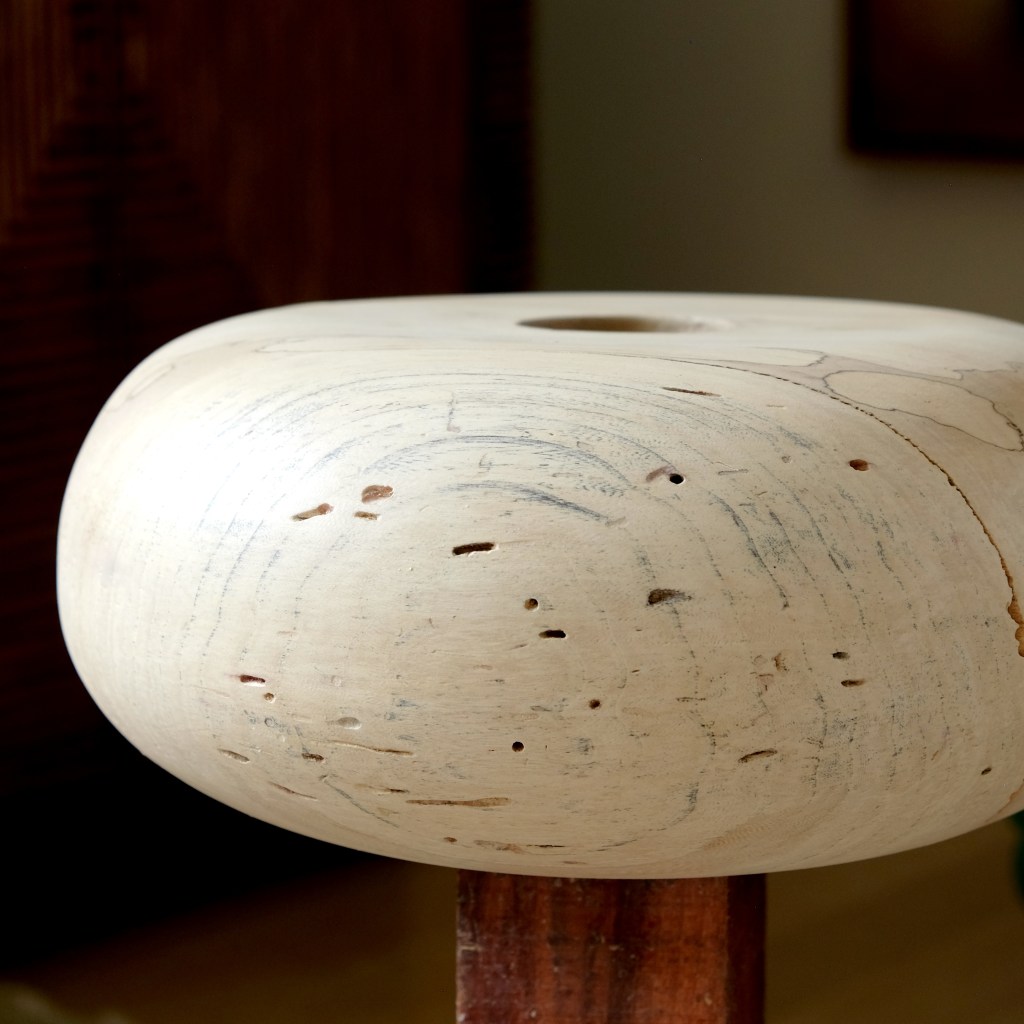
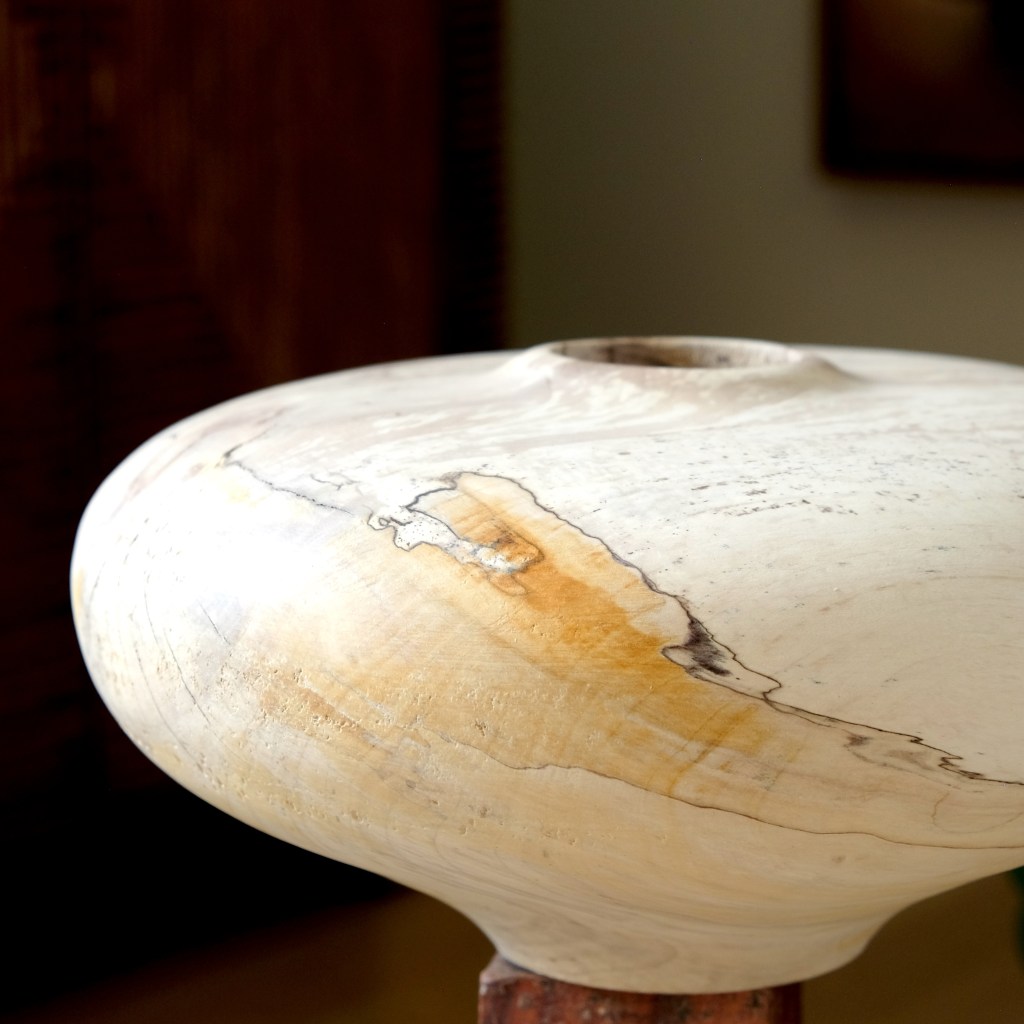
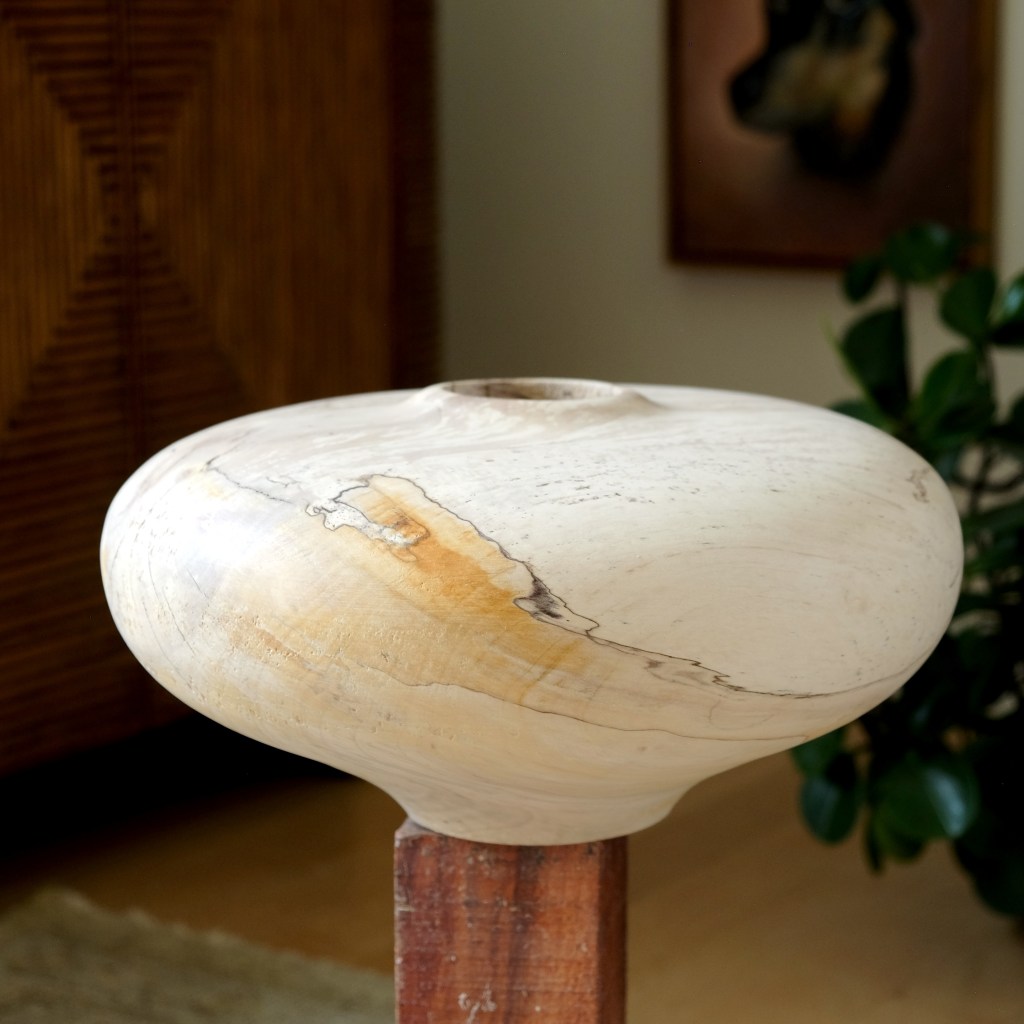
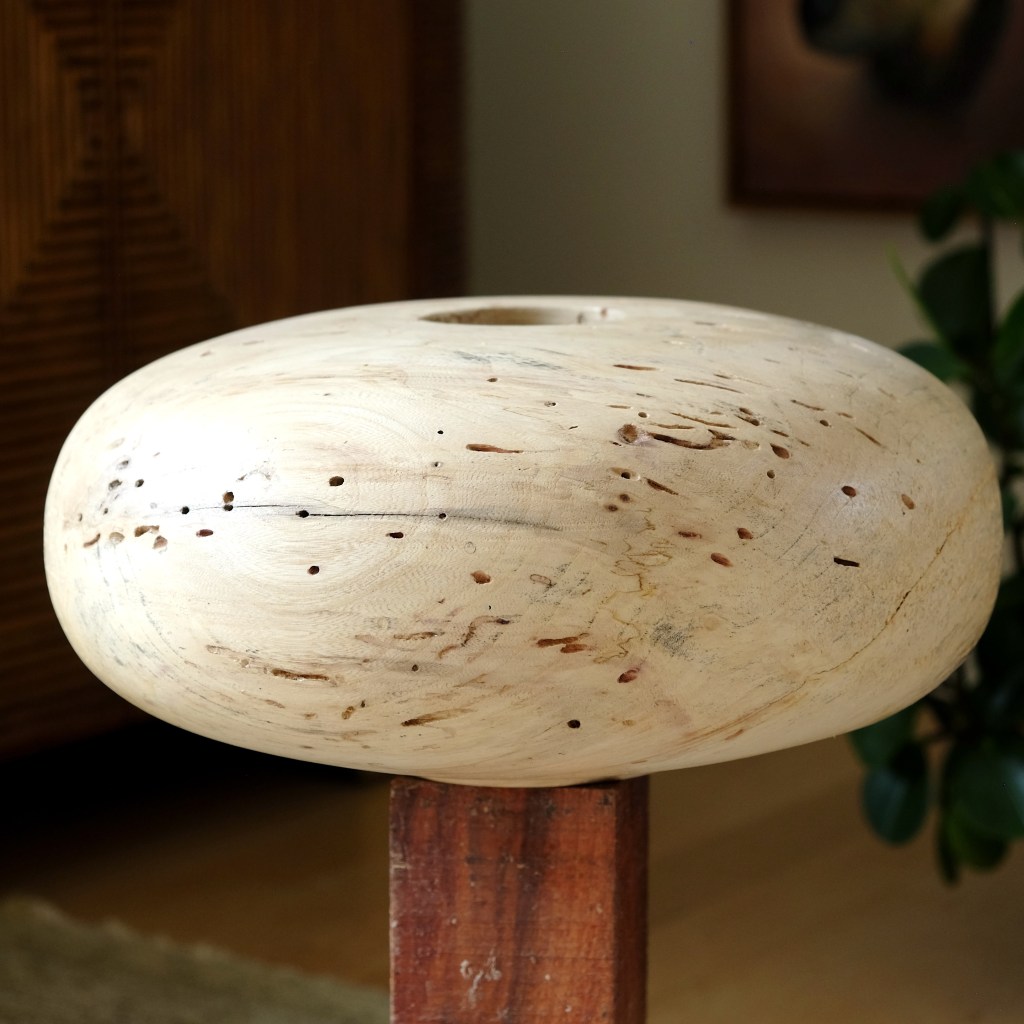
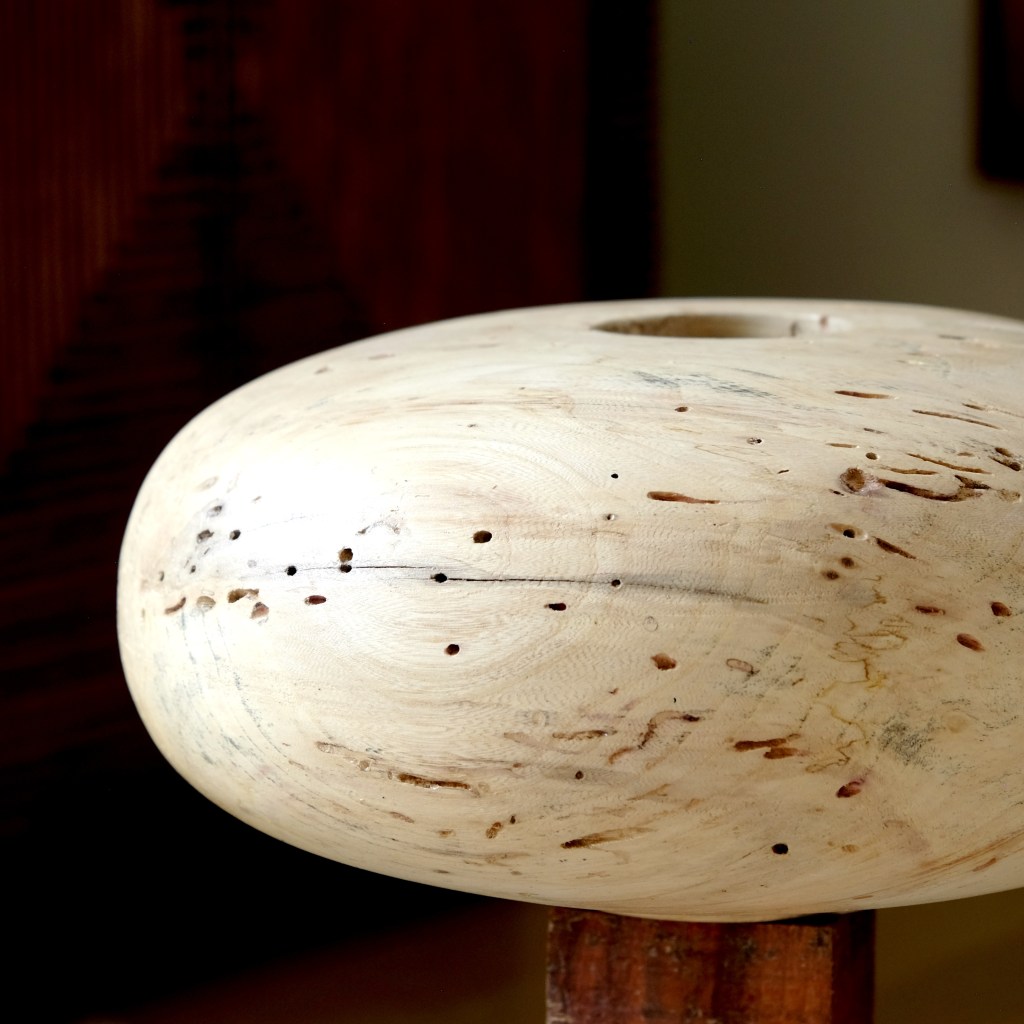
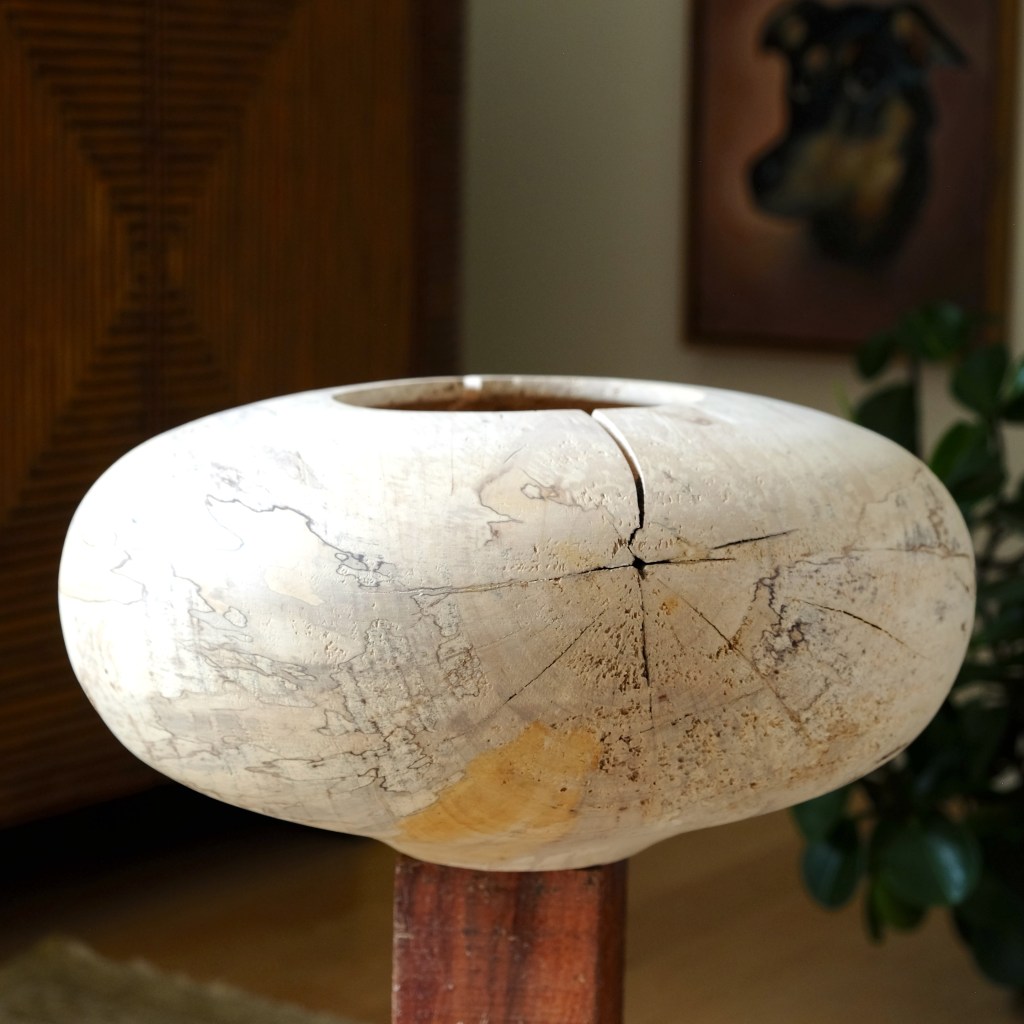
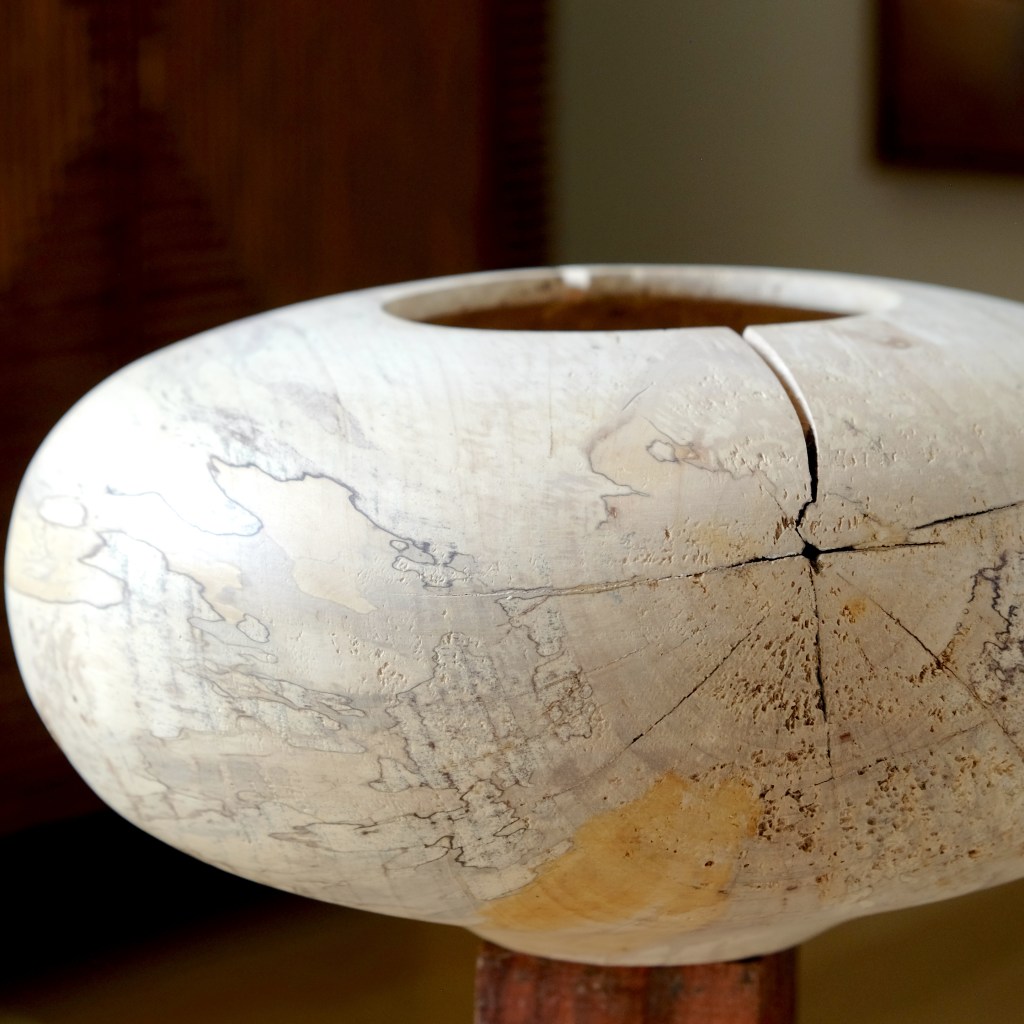
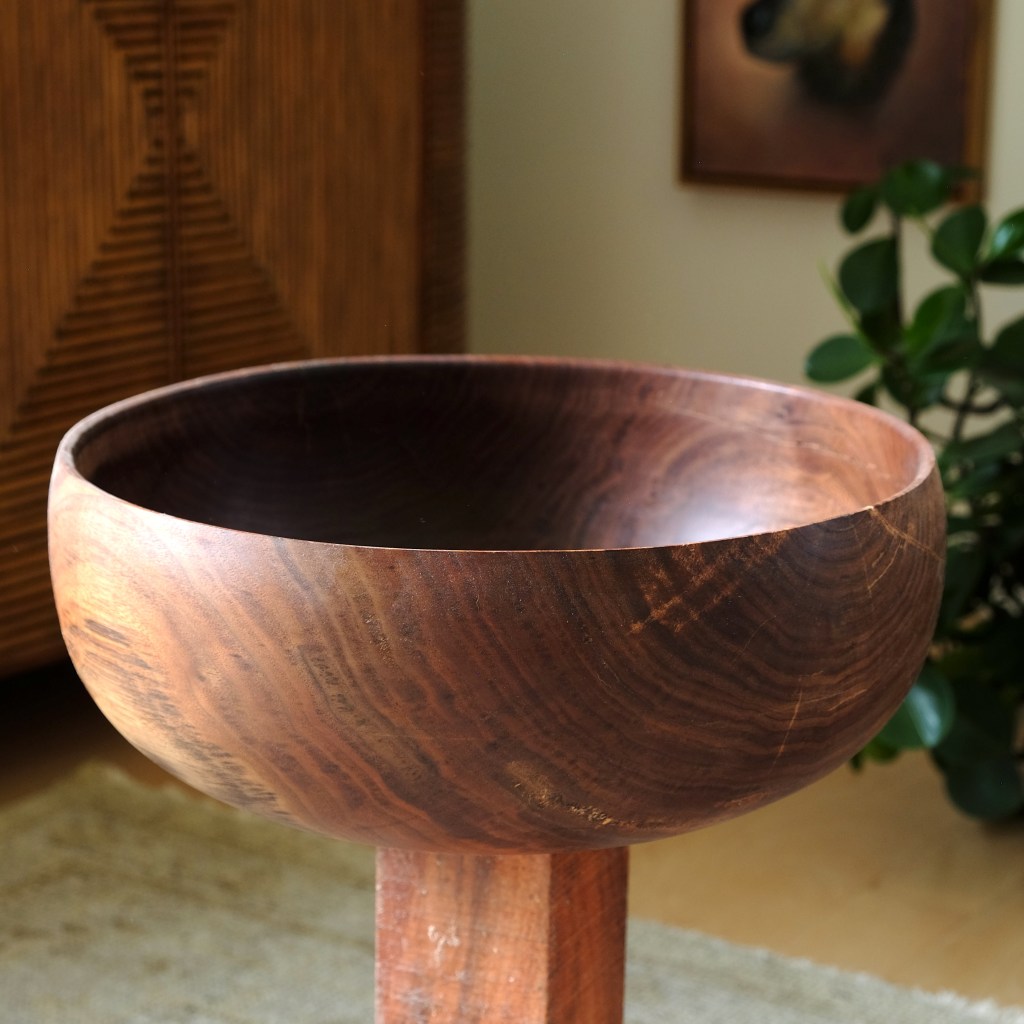
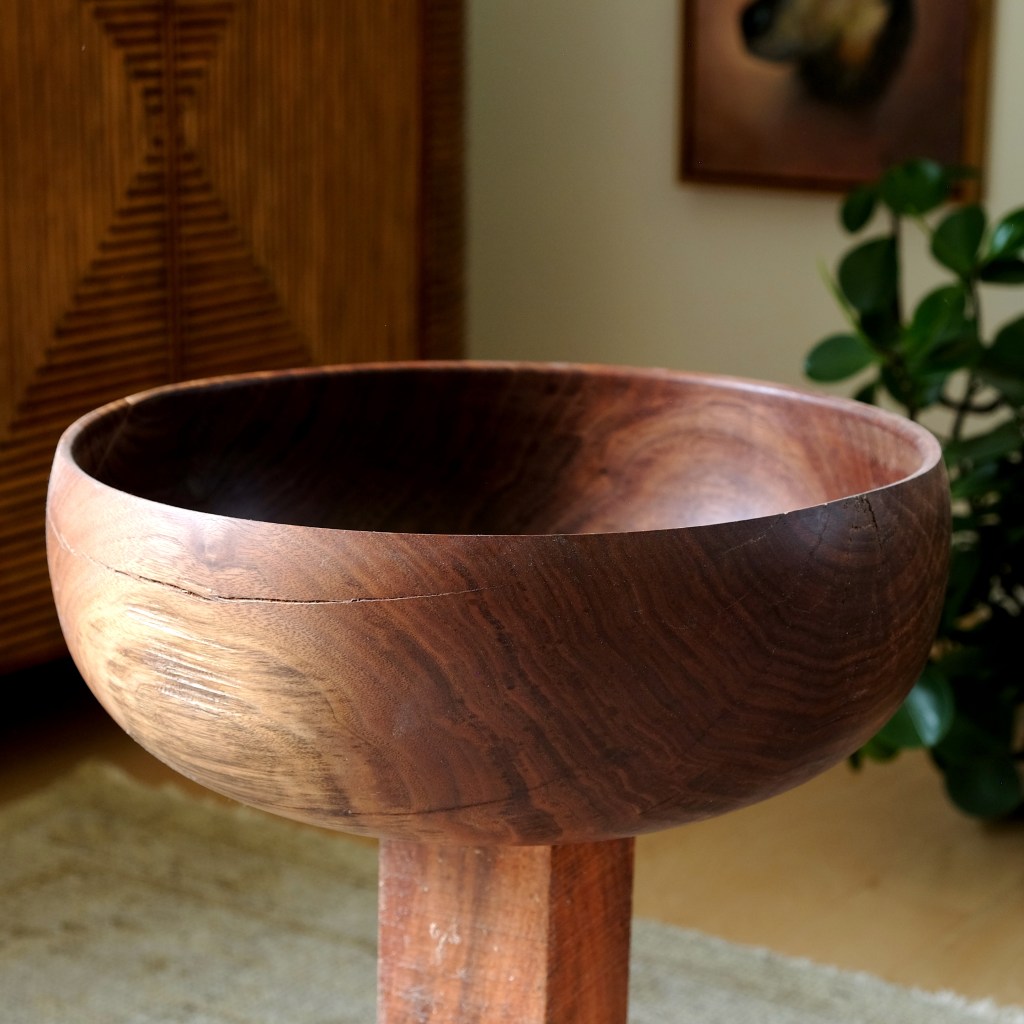
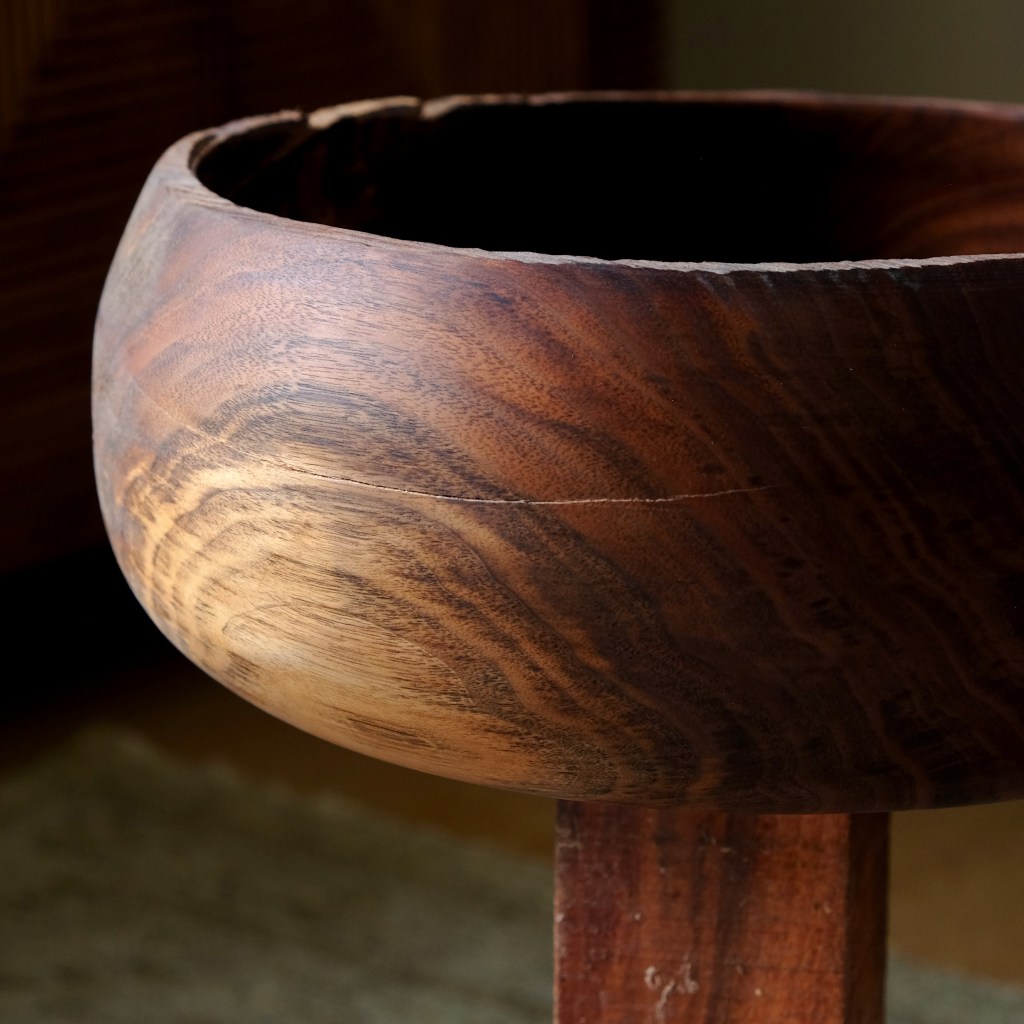
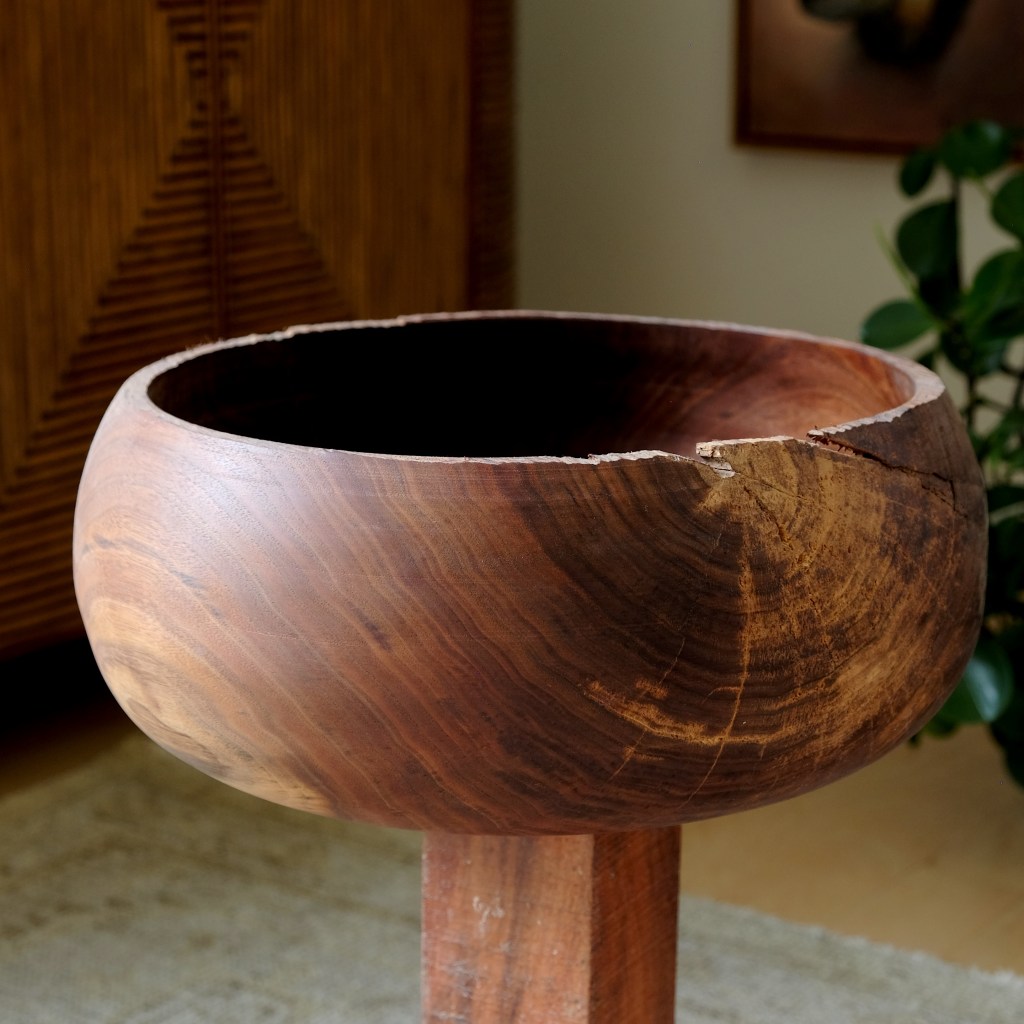
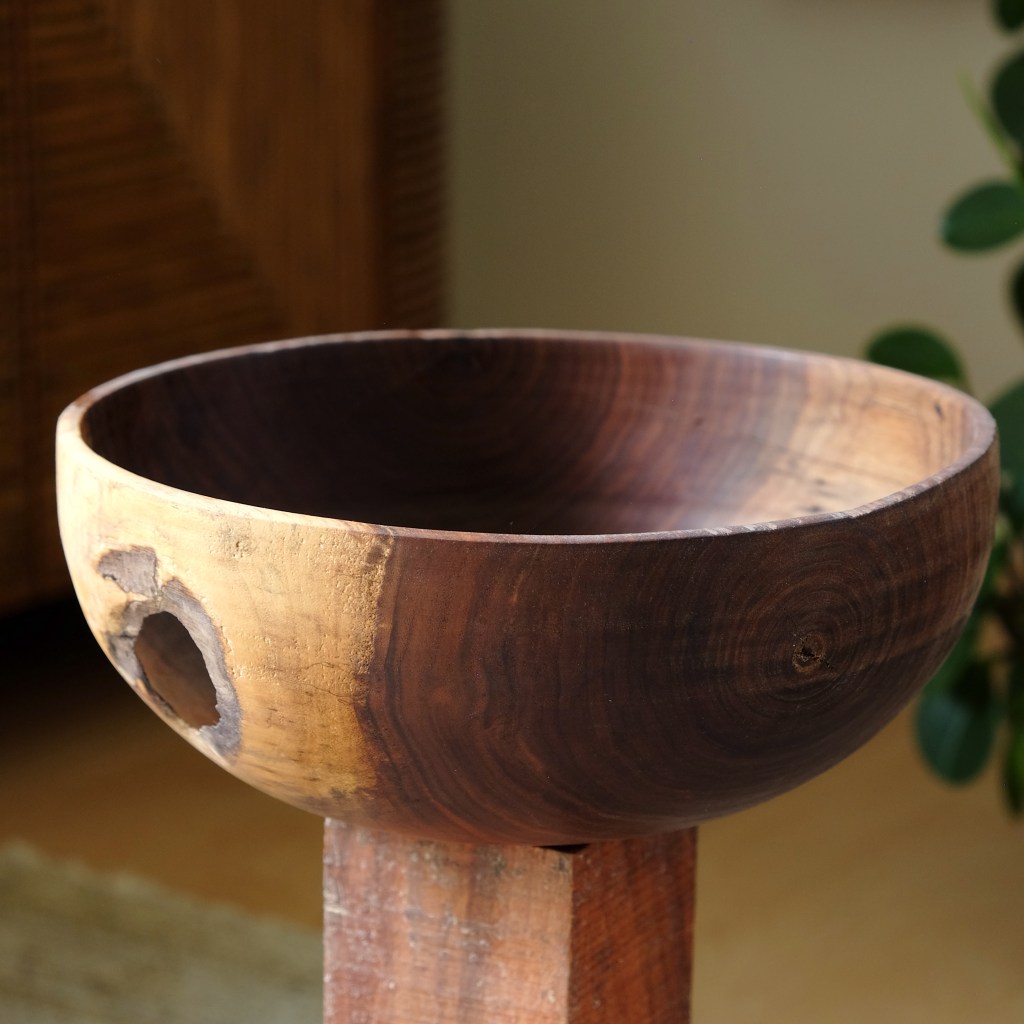
This current collection is a variety of walnut, spalted maple and sycamore from Crystal Lake, IL. Each is labeled the wood type, the year and the neighborhood the wood was collected from. My preferred medium is spalted maple and other light toned wood. Spalting is a natural process caused my fungal breakdown of wood. When fungi colonize the wood they leave behind pigments and chemical boundaries. These boundaries create beautiful and unpredictable patterns on the wood. For the most part my work starts out with fresh logs that I place in the shade where spores from the environment can find them and begin the process of breaking down the wood. I leave them for a year or two or until I see mushrooms forming. At this point it’s a race against time when to turn. If left for too long the wood can become too soft and spongy to work. I don’t really have much control over what the final piece will look like but I generally start with a sphere or doorknob shape. Then once the spalting patterns are revealed, I decide on the orientation. In woodturning as in stonework the material continuously disappears as one works on a final form. Part of the challenge is starting with a single cut of a log about the width of the final piece and finding the final form before loosing too much material. Failure and danger is an everyday reality in woodturning and helps one focus and informs the outcome. When I was a kid my dad would take me fossil and geode hunting. Woodturning and rock hunting have an element of unknown that makes both such a joy when something spectacular is discovered. Although I start with an image of a vessel in mind, the wood has it’s own character and rules that determine the final product.
Although I have turned many bowls my primary focus is making hollow-form vessels. My initial and continuous inspiration for my work are woodturners David Ellsworth the Moulthrop brothers. Please inquire about pricing.
 HOME
HOME 